The advancement of artificial intelligence (AI) continues to break boundaries, impacting various sectors from technology to space exploration. Giants like Google, MIT, Microsoft, Elon Musk, IBM, and NASA are making significant strides in AI, bringing to light innovations that aim to improve user privacy, enhance voice synthesis, predict solar events, and automate complex tasks. This article delves into these noteworthy advancements, illustrating how each entity is contributing to the dynamic landscape of AI.
Introduction to Recent AI Advancements
The rapid progression of AI technologies has ushered in a multitude of advancements that are reshaping industries and influencing daily life. Companies and institutions are leveraging AI’s capabilities to solve complex problems, optimize performance, and offer novel solutions. This wave of innovation holds promise for transforming various sectors, from enhancing online privacy and voice communication to predicting solar phenomena and automating tasks.
Google and MIT’s MAD Algorithm: Enhancing Trend Detection with Privacy
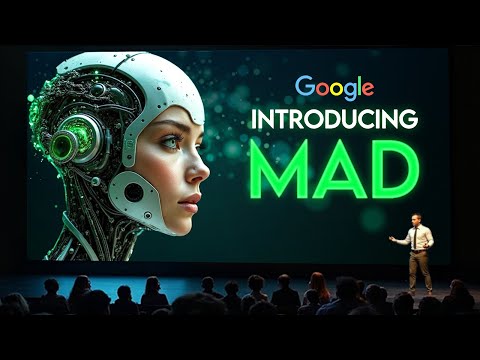
Google and MIT have collaborated to develop the Max Adaptive Degree (MAD) algorithm, a cutting-edge tool designed to improve trend detection while safeguarding user privacy. Traditional methods often focus excessively on popular items, neglecting subtle but significant patterns in large datasets. MAD addresses this by redistributing attention from over-represented to under-represented items, enabling platforms to uncover valuable insights without compromising individual user data. This algorithm’s superior performance on diverse datasets highlights its potential to revolutionize how online trends are detected and analyzed.
Microsoft’s Vibe Voice 1.5B: Advancing Synthetic Voice Technology
Microsoft’s new voice AI model, Vibe Voice 1.5B, stands at the forefront of synthetic voice technology. Capable of generating up to 90 minutes of continuous speech, including cross-lingual outputs and varied speaking styles, this model thrives on its dual-tokenizer architecture. The acoustic tokenizer enhances efficiency by condensing audio data, while the semantic tokenizer ensures natural conversation flow by comprehending content. This breakthrough enables the creation of human-like, multi-speaker dialogues and even singing, marking a significant leap in the field of synthetic voices.
Elon Musk’s Macrohard: AI Agents and Legal Battles
Elon Musk’s latest venture, Macrohard, aims to revolutionize the development of AI agents capable of performing tasks such as coding and workflow automation. Driven by Musk’s chatbot, Grock, this ambitious project promises to streamline various operations across industries. Concurrently, Musk’s companies have engaged in legal action against Apple and OpenAI, alleging a monopolistic partnership that stifles AI competition. The lawsuit underscores the broader concerns regarding consumer choice and innovation within the tech industry.
IBM and NASA’s Surria: Predicting Solar Events with AI
In a groundbreaking collaboration, IBM and NASA have unveiled Surria, an open-source AI model designed to predict solar events that could impact Earth’s technological infrastructure. Utilizing nine years of data from NASA’s Solar Dynamics Observatory, Surria enhances the accuracy of forecasting solar flares and reduces warning times significantly. This model exemplifies how AI can manage vast and intricate datasets, providing invaluable insights into solar behavior and aiding in the protection of critical infrastructure and space missions.
Conclusion: The Future of AI Across Various Domains
The advancements described in this article reflect the remarkable potential of AI to drive innovation and address complex challenges across multiple domains. As Google and MIT enhance trend detection while preserving user privacy, Microsoft’s Vibe Voice 1.5B pushes the boundaries of synthetic voice technology. At the same time, Elon Musk’s Macrohard explores new frontiers in AI automation, and IBM and NASA’s Surria improves our ability to predict solar events. These contributions collectively highlight the transformative impact of AI, promising a future where intelligent systems play a ubiquitous and integrative role in our daily lives.