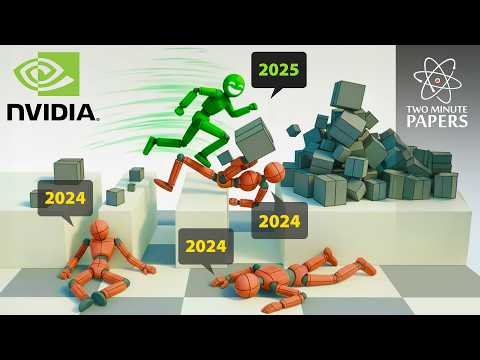
In the ever-evolving realm of digital animation, the quest for achieving the utmost realism remains a constant challenge. Animators and developers have long sought to create virtual characters that move with the same fluidity and grace as their human counterparts. This desire has driven numerous technological advancements, with notable milestones such as the groundbreaking DeepMimic system and the more recent Adversarial Differential Discriminator (ADD). This article delves into these transformative technologies and examines how they are pushing the boundaries of what is possible in digital character movement.
Introduction: The Quest for Realistic Digital Movement
The dream of animating digital characters that move like humans has been a driving force for animators and developers alike. Traditional motion capture technologies, which record human movements, have played a significant role in this quest. However, creating realistic virtual characters requires more than just mimicking human actions—it necessitates an in-depth understanding of the forces and torques that facilitate these movements. The complexity of this task has led to innovative solutions like DeepMimic and ADD, which are revolutionizing the field.
DeepMimic: Gamifying Motion Imitation
Introduced in a 2018 paper, DeepMimic fundamentally transformed the approach to motion imitation. This system gamifies the process by awarding scores to various joint movements, angles, and physical interactions. Through repeated attempts and learning from these scores, the artificial intelligence manages to achieve a level of motion imitation comparable to human performances. The technology’s versatility allows it to adapt to different body types and respond to commands to enhance motion, thus demonstrating its wide-ranging applicability.
Limitations of DeepMimic
Despite its revolutionary approach, DeepMimic is not without its limitations. Each scoring criterion in the system requires meticulous handcrafting. Any change in parameters, such as the type of motion or the body model, necessitates extensive retuning of the scores. This manual adjustment process can be labor-intensive and complex, underscoring the system’s reliance on human input and judgment. Consequently, while DeepMimic moved the needle forward, it highlighted the need for more automated and less labor-intensive solutions.
The Advent of ADD: A Revolutionary Approach
Enter the Adversarial Differential Discriminator (ADD), a new paper that aims to address the challenges posed by DeepMimic. Unlike its predecessor, ADD employs an AI judge that learns what constitutes a perfect performance. This AI judge provides a holistic evaluation of the movements, thereby simplifying the process of refining them. As training progresses, the AI becomes adept at identifying and correcting anomalies in the virtual characters’ movements, significantly enhancing automation and efficiency in achieving realistic animations.
Comparing DeepMimic and ADD: Performance and Realism
When we compare the performance of ADD with that of DeepMimic across various tasks, the former shows remarkable improvements. For example, in challenging scenarios like parkour and climbing, ADD’s AI judge delivers more accurate and lifelike results. This enhancement underscores its ability to adapt to complex movements more fluidly than previous methods. The comparison illustrates how ADD’s innovative approach offers new levels of realism and fluidity in digital character movement.
Future Prospects: Towards Perfecting Digital Human Movement
As we look toward the future, the potential for further advancements in motion imitation is highly promising. Although there are still hurdles to overcome, such as occasional struggles with more complex movements, the progress made by systems like DeepMimic and ADD suggests we are on the brink of achieving near-perfect digital human movement. These innovations hold significant promise for the future of animation, opening up new possibilities for creating digital characters that move with the same intentionality and grace as their human counterparts.
In conclusion, the journey from DeepMimic to ADD represents a significant leap forward in the quest for realistic digital character movement. By embracing these technological advancements, animators and developers are closer than ever to creating virtual characters that can move and interact with the world in a manner indistinguishable from real humans.