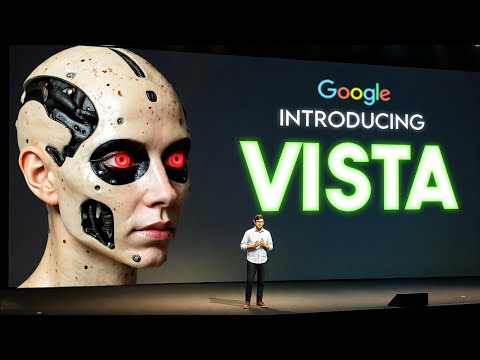
In the ever-evolving landscape of artificial intelligence, Google has once again taken a giant leap forward with the introduction of Vista. This advanced AI model for video creation is set to revolutionize how videos are conceptualized, produced, and refined. By intelligently rewriting prompts based on previous outcomes and employing a sophisticated evaluation mechanism, Vista promises a new era of efficient and high-quality video generation. This article delves into the operational framework of Vista, its evaluation process, performance metrics, and broader implications for the industry.
Introduction to Google’s Vista AI
Google’s Vista AI represents a groundbreaking advancement in video creation technology. Unlike traditional models that rely heavily on retraining and fine-tuning, Vista autonomously improves its outputs through a process of intelligent prompt-rewriting. Over time, it learns from its mistakes and enhances video quality until achieving a polished final product. The AI model has already demonstrated a remarkable 60% win rate against Google’s previous top model, V3, showcasing its significant progression in AI-driven video generation.
Operational Framework and Workflow
At the core of Vista’s operations is a methodical approach to breaking down video ideas into detailed plans. Each plan outlines specific elements of the video, including scene duration, type, characters, actions, dialogues, visual environment, camera work, sounds, and overall mood. This structured methodology ensures the AI generates videos systematically rather than relying on arbitrary prompts. The result is a notable increase in the quality and relevance of the generated videos.
Evaluation and Improvement Mechanism
Vista employs a tournament-based evaluation system where multiple video candidates are pitted against each other in pairwise comparisons. Each video undergoes a thorough analysis through probing critiques before any comparisons are made. The evaluation process involves three types of judges: a normal judge who scores the video, an adversarial judge who identifies flaws, and a meta judge who integrates insights from the other two. This comprehensive approach ensures that videos are judged based on detailed evaluations, enhancing overall quality.
Performance Metrics and Results
In terms of performance, Vista significantly outperforms traditional methods that rely on simple direct prompting. Testing has shown that Vista achieved a win rate of nearly 46% across different prompt types after several iterations. This consistent improvement highlights the AI’s ability to adapt and learn rather than merely producing randomly high-quality outputs.
Technical Setup and Resource Management
Vista’s technical framework includes the integration of existing models like Gemini 2.5 Flash and V3. Despite utilizing older models, Vista has demonstrated robustness and generalizability, handling various video generation tasks effectively. However, the process involves substantial computational resources due to the need for generating multiple iterations, which translates to increased operational costs. Yet, the high performance and quality outputs justify the investment.
Reducing Errors and Adherence to Prompts
Vista effectively reduces common AI errors, such as hallucinations—where the AI generates unrelated or unrealistic content—by imposing strict guidelines during the planning phase. Adherence to user prompts is crucial, and the model imposes penalties for deviations, ensuring the final video remains coherent and contextually appropriate.
Broader Implications and Industry Impact
In the broader context of AI advancements, Vista represents a pivotal shift towards ‘test time optimization,’ moving away from the practice of training larger models for specific tasks. This evolution in video generation aims to refine outputs at the inference stage, balancing various elements like visual appeal, audio fidelity, and contextual relevance. Its efficiency in production and automation has the potential to drastically reduce costs and accelerate workflows in sectors such as media, marketing, education, and entertainment.
Limitations and Future Prospects
Despite its impressive capabilities, Vista is not without limitations. The model’s performance is subject to the biases inherent in its evaluation frameworks, and it cannot surpass the capabilities of its foundational systems. Nevertheless, the advancements in production efficiency and automation offer promising prospects for the future, potentially transforming the landscape of video creation across various industries.
In conclusion, Google’s Vista AI is poised to redefine the video creation process with its innovative prompt-rewriting capabilities, meticulous evaluation mechanisms, and iterative improvements. As the technology evolves, it holds the promise of making high-quality video production more accessible and efficient, marking a significant milestone in the realm of AI-driven content generation.