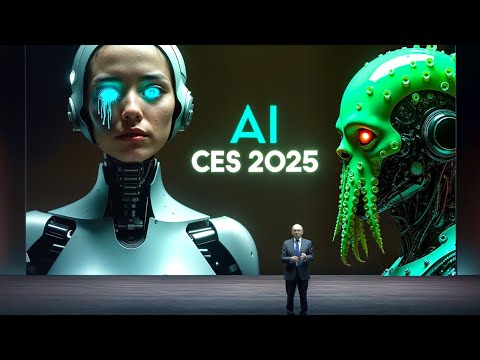
CES 2025, the world’s most anticipated technology event, has once again set the stage for the future. With over 4,500 exhibitors spanning 232,000 square meters, the excitement was palpable, and the theme was clear: AI is the driving force behind the next wave of technological advancements. Attendees witnessed how artificial intelligence is revamping personal devices, gaming, automotive technology, robotics, and industrial operations. This article will delve into the major highlights and innovations unveiled, focusing on leading companies like Nvidia and their groundbreaking contributions.
Introduction to CES 2025: A Glimpse into the Future
CES 2025 opened with a bang, underlining the significance of AI and technology in shaping the future. The event was a melting pot of ideas and innovations, with diverse sectors showcasing the impact of AI on their respective fields. From personal computing to environmental sustainability, the scope of advancements presented was nothing short of revolutionary.
Nvidia’s Groundbreaking Announcements: Transforming Technology
Nvidia stole the spotlight with CEO Jensen Huang’s keynote address, which introduced the new GeForce RTX 50 Series GPUs based on the innovative Blackwell architecture. The flagship RTX 5990, boasting 92 billion transistors and capable of performing 3352 trillion AI operations per second, set a new benchmark in graphics processing. Nvidia’s advancements don’t end there; the company also revealed DLSS 4, a technology that uses deep learning to enhance visual rendering across gaming, architecture, and filmmaking industries.
Innovative AI Applications Across Industries
Nvidia’s announcements exemplify how AI is revolutionizing various industries. The Cosmos platform allows for simulated real-world scenarios where robots and autonomous vehicles can be trained safely. Furthermore, Nvidia’s agentic AI concepts go beyond standard chatbots, offering reasoning, planning, and action capabilities that can optimize tasks in fraud detection and supply chain management.
AI in Personal and Professional Devices: A New Era of Computing
Personal computing witnessed remarkable innovations. Companies like Intel, AMD, and Qualcomm introduced processors equipped with Neural Processing Units (NPUs), which manage AI workloads locally, ensuring faster and more secure processing. Microsoft’s Co-Pilot platform further enhanced these capabilities, providing conversational AI interactions that are more intuitive and user-friendly.
Robotics and Automation: Enhancing Everyday Life
AI-driven automation saw incredible strides at CES 2025. Robo Rock vacuum, equipped with a robotic arm that picks up obstacles before cleaning, represented a leap in home automation. Additionally, Jenny, the robotic dog, was designed to provide companionship for individuals with dementia, indicating how AI can have positive impacts on healthcare and personal well-being.
Environmental and Health Innovations: The Positive Impact of AI
Environmental technology took center stage with companies like Moluscan using mollusks as sensors to monitor water quality, bridging biological systems and technology. Such innovations highlight how AI and tech can solve pressing environmental challenges. On the health front, AI-driven devices are set to revolutionize diagnostics, patient care, and personalized medicine.
The Future of Automotive Technology: Towards Autonomy
The automotive industry remains a key focus area for AI. Nvidia’s collaboration with Toyota aims to integrate Drive AGX Orin supercomputers into new vehicle models, enhancing driver assistance systems. The concept of Woven City, a smart city by Toyota, is a testbed for numerous AI and robotics applications. Additionally, Mobileye presented its Surround ADAS, which enhances road safety and moves us closer to fully autonomous driving.
CES 2025 was a powerful testament to how AI is at the heart of technological evolution. From groundbreaking graphics processing units to personal and professional devices, and from robotics to environmental tech, the innovations on display were awe-inspiring. As AI continues to mature, the potential for transformative change across industries is immense, making the future incredibly exciting.