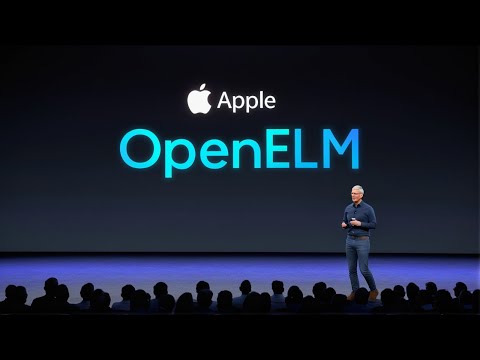
In an unprecedented move that caught the tech world by surprise, Apple recently introduced Open Elm, a generative AI model that marks a significant shift toward openness and collaborative development in AI. Departing from the industry’s trend of closely guarded innovations, Open Elm is not only open-source but also boasts greater accuracy and efficiency than its predecessors. This strategic pivot underscores Apple’s progressive stance in AI technology, aiming to foster a community of innovation and shared advancements. The introduction of Open Elm is a testament to Apple’s commitment to blending the boundaries of proprietary development and open-source philosophy, setting a new standard for the future of artificial intelligence.
Introduction to Open Elm and Its Significance
Apple’s launch of Open Elm symbolizes a bold step toward the democratization of AI technology. By making Open Elm an open-source platform, Apple empowers developers, researchers, and innovators across the globe to collaborate, refine, and expand the AI model. This initiative not only accelerates AI development at a broader scale but also demonstrates a shift in how technology giants can contribute to communal growth. Open Elm’s promise lies not just in its technical prowess but in setting a precedent for future AI development, signaling a new era of open innovation in the tech industry.
Technical Insights and Achievements of Open Elm
Developed by Apple’s seasoned researchers, Open Elm represents the pinnacle of generative AI models. Its technical backbone is founded on layerwise scaling, an innovative approach that meticulously optimizes parameters for enhanced efficiency and accuracy. Open Elm’s training on an unprecedented scale of public data has endowed it with the ability to generate human-like text, opening new vistas in AI applications. These technical achievements not only highlight Apple’s technical acumen but also its foresight in building scalable, versatile AI solutions for the future.
Unique Features and Open-Source Philosophy
Setting Open Elm apart from other models is Apple’s unwavering commitment to transparency and community-driven development. By availing detailed training logs, checkpoints, and setups, Apple invites the global tech community to build upon Open Elm’s foundation. This open-source philosophy underlines a broader vision of collaborative innovation, where shared knowledge propels advancements in AI, making technology more accessible and impactful for all.
Efficiency and Accuracy: A Comparative Analysis
In its comparison with counterparts like MMO, Open Elm stands out for its efficiency and accuracy, achieved through fewer pre-training tokens. This accomplishment is attributed to sophisticated techniques like layerwise scaling and intelligent training methodologies, which collectively enhance Open Elm’s performance in benchmark tests. These advancements not only signify a leap in model design but also redefine benchmarks for AI efficiency and accuracy.
Benchmarking and Real-World Performance
Apple’s meticulous benchmarking of Open Elm underscores its prowess across various parameters, including speed, accuracy, and compatibility with different hardware configurations. The model’s exceptional performance in real-world applications vindicates its reliability and effectiveness, paving the path for innovative AI applications across industries. Moreover, this benchmarking process serves as a beacon for continuous improvement and optimization of AI models.
Integration with Apple’s Ecosystem
Optimized to synergize with Apple’s hardware and software ecosystem, Open Elm exemplifies Apple’s strategy to leverage its technological infrastructure for advancing AI research and applications. The model’s seamless integration with Apple’s devices ensures developers and researchers can harness its full potential, creating a conducive environment for AI innovations that complement Apple’s technology suite.
The Future of AI: Continuous Improvement and Benchmarking
The evolution of Open Elm is not seen as a finished product but as a work in progress, with Apple keen on refining and enhancing the model through continuous benchmarking and improvements. This forward-thinking approach not only aligns with the ethos of open-source development but also promises a future where AI technology is ever-evolving, driven by collaboration and shared success. Apple’s journey with Open Elm is not just revolutionizing AI development but is also charting a course toward a more open, innovative future in technology.