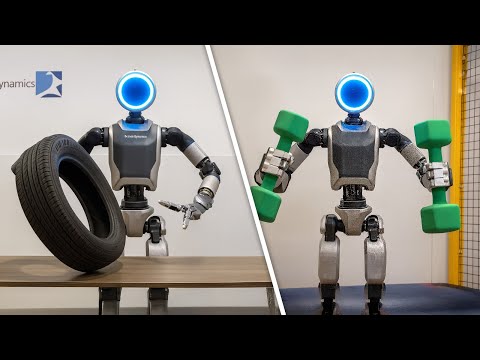
Humanoid robots have piqued the imaginations of scientists, tech enthusiasts, and the general public for decades. These technological marvels represent the pinnacle of robotics engineering, designed to mimic human form and function. As recent technological advancements push the capabilities of humanoid robots to new heights, we stand on the precipice of a future where these machines could revolutionize both industrial and domestic environments. Pioneers in this field, such as Boston Dynamics and Figure AI, are leading the charge with their cutting-edge robots, Atlas and Figure03. This blog post delves into the latest developments in humanoid robotics, examines the competitive landscape, and explores the ethical considerations that come with these advancements.
Introduction to Humanoid Robotics
Humanoid robots are designed to replicate human movement, dexterity, and cognition. Their purpose ranges from performing repetitive industrial tasks to aiding in household chores, making them versatile tools for both commercial and personal use. Early iterations of humanoid robots often struggled with balance and coordination, but recent innovations have drastically improved their performance. Today’s humanoid robots are equipped with advanced sensors, AI capabilities, and sophisticated manipulation systems that enable them to undertake a broader variety of tasks effectively.
Boston Dynamics’ Atlas: A Leap in Dexterity with GR2
Boston Dynamics has significantly enhanced the dexterity of its Atlas robot with the introduction of the GR2 gripper. This state-of-the-art manipulator features seven degrees of freedom, with six actuators maneuvering three fingers and an opposable thumb. The inclusion of tactile sensors provides the gripper with a sense of touch, allowing it to modulate the force of its grip to prevent damaging objects. This capability is crucial for tasks requiring precision, such as bin picking and delicate inspections. Designed for robustness, the GR2 gripper is modular, facilitating easy replacements and adjustments. Such advances make Atlas a valuable asset in industrial environments, capable of performing complex tasks that demand high levels of dexterity and reliability.
Figure AI’s Figure03: AI-Powered Versatility
Figure AI has introduced Figure03, a humanoid robot that integrates the advanced AI system known as Helix. This AI enables Figure03 to learn tasks through direct interaction, making the robot more autonomous and adaptable. The robot is lighter and features an extended sensor field of view and custom tactile sensors that detect minute pressure changes, enhancing its effectiveness in household tasks. Unlike previous robots that only excelled in controlled lab environments, Figure03 demonstrates practical applications such as washing dishes and navigating stairs. However, challenges remain in ensuring consistent performance in less predictable, real-world settings.
Competitive Landscape: Industry Leaders and Their Strategies
The competitive landscape of humanoid robots is fierce, with several key players striving to establish their technologies as the industry standard. Boston Dynamics focuses on enhancing the mechanical capabilities and dexterity of its robots, making them suitable for complex industrial tasks. On the other hand, Figure AI emphasizes scalable production and the integration of sophisticated AI systems for general-purpose use. Tesla is also making strides with its Optimus robot, adding to the competition. As these companies push the boundaries of what humanoid robots can achieve, their different strategies highlight the diverse applications and promising potential of these machines.
Challenges and Ethical Considerations in Humanoid Robotics
While the advancements in humanoid robotics are promising, they come with their own set of challenges and ethical concerns. One of the primary issues is the readiness of these robots for widespread adoption, particularly in environments that are less controlled than testing laboratories. The reliability and safety of these robots in real-world scenarios remain points of concern. Furthermore, ethical considerations such as the potential for job displacement and the broader societal impact of integrating robots into everyday life cannot be overlooked. As these technologies mature, it is essential to balance innovation with thoughtful consideration of their implications for humanity.
In summary, the advancements in humanoid robotics by companies like Boston Dynamics and Figure AI represent significant milestones in the field. With robots like Atlas and Figure03, we are witnessing the transition from mere technological demonstrations to practical, real-world applications. However, as we step into this future, it is crucial to address the challenges and ethical questions that come with it. Through careful consideration and strategic implementation, humanoid robots hold the potential to transform industries and homes alike, creating a more efficient and advanced society.