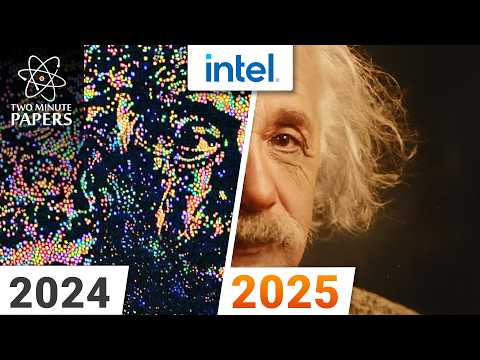
In the ever-evolving field of computer graphics, new techniques continually push the boundaries of what is possible. One such groundbreaking development is Gaussian splatting, a method that promises to revolutionize how we generate and render images. By enabling real-time rendering, efficient data compression, and the production of high-quality imagery with minimal storage, Gaussian splatting is poised to make a significant impact across various applications. In this article, we will delve into the intricacies of Gaussian splatting, explore its numerous advantages, and look at its exciting future implications.
Introduction to Gaussian Splatting
Gaussian splatting is an innovative computer graphics technique that allows for the creation of highly detailed virtual representations of the real world. Unlike traditional methods that rely on complex geometric information, Gaussian splatting simplifies scenes by representing objects as numerous small blobs. These blobs, akin to particles in a cloud of dust, can focus on displaying details where necessary while omitting empty spaces. This technique enables high-resolution rendering of intricate structures in real-time, significantly enhancing the efficiency of graphic generation.
How Gaussian Splatting Works
At its core, Gaussian splatting works by analyzing the edges of scenes or images and initializing Gaussian blobs based on this data. These blobs can be moved, stretched, and repainted to closely match the original input. By simplifying scenes in this way, Gaussian splatting reduces the amount of data required for rendering, allowing for faster and more efficient performance without sacrificing visual quality. Essentially, it compresses data while maintaining the intricacy and sharpness of the original imagery. The result is a beautiful, refined output that is both visually appealing and data-efficient.
Advantages of Gaussian Splatting
One of the most notable advantages of Gaussian splatting is its impressive data compression capabilities. Unlike traditional methods that depend on detailed geometric data, Gaussian splatting achieves similar outputs with significantly less data. This leads to faster rendering speeds and reduced storage requirements. Additionally, the technique offers high-quality imagery that is free from the artifacts commonly found in compressed formats like JPEG. This combination of high-quality output and efficient storage makes Gaussian splatting particularly valuable for applications requiring real-time rendering and high-resolution graphics.
Applications in Image Refinement
The potential applications of Gaussian splatting extend beyond scene rendering to individual image refinement. Researchers at Intel, AMD, and New York University have demonstrated its capability to enhance photographs by analyzing and initializing Gaussian blobs based on the image’s edges. For example, when applied to a photograph of the Curiosity rover on Mars, Gaussian splatting manipulates these blobs to closely match the original image, resulting in a detailed and refined output. This process highlights the technique’s versatility and potential for use in various image-enhancement applications.
Comparing Gaussian Splatting to JPEG Compression
Gaussian splatting also stands out when compared to traditional JPEG compression. While JPEG has been an industry standard for decades, it often produces images with noticeable artifacts, especially at higher compression levels. In contrast, Gaussian splatting maintains superior image quality at similar file sizes. For instance, an image compressed via JPEG might be around 159 kilobytes, while the same image processed using Gaussian splatting would result in a similar file size but with a cleaner, artifact-free appearance. This comparison underscores the potential for Gaussian splatting to become a new standard in image compression.
Future Implications of Gaussian Splatting
The advancements in Gaussian splatting herald a new era in computer graphics, promising high-quality images with minimal storage requirements. This technique opens up exciting possibilities for various fields, from virtual reality to scientific visualization and beyond. As research and development continue, the adoption of Gaussian splatting across different industries could lead to more efficient and visually stunning graphics. The significance of this research extends beyond immediate applications, paving the way for future innovations in graphics technology.
In conclusion, Gaussian splatting represents a visionary step forward in computer graphics, offering real-time rendering, data compression, and high-resolution imagery with minimal storage. As this technique gains recognition and appreciation within the academic and professional communities, its transformative potential will undoubtedly shape the future of graphics technology.