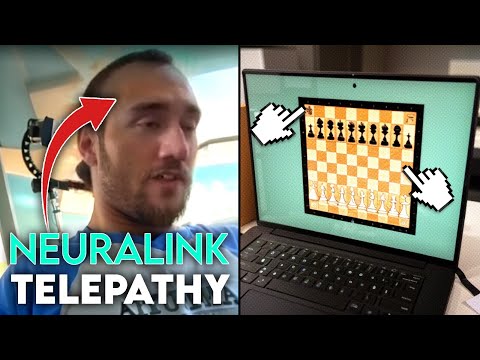
In a world where technology continuously shapes the way we interact with our surroundings, Neuralink, spearheaded by visionary Elon Musk, is leaping bounds into the future of how humans engage with computers. The recent revelation of a paralyzed individual, Nolan Arbaugh, controlling a computer cursor merely through his thoughts, has not only spotlighted the immense potential of Neuralink’s technologies but also heightened conversations around the future of human-computer interaction. This milestone hints at a new era wherein disabilities are circumvented by the power of neural engineering, promising a future where the fabric of human experience is significantly enhanced by the merger of brain and machine.
Neuralink’s Breakthrough: A New Dawn in Human-Computer Interaction
The impressive display of Nolan Arbaugh playing chess on a computer without moving a muscle other than his brain waves is just the beginning of what Neuralink aims to achieve. This breakthrough demonstrates more than just a mechanically advanced feat; it symbolizes hope, freedom, and the boundless capabilities of the human mind when synchronously coupled with leading-edge technology. Neuralink’s project showcases a direct neural interface system that is designed to pick up on the neural activity of the brain, enabling individuals to interact with digital devices effortlessly using their thoughts.
Challenges and Progress: The Journey of Neuralink’s Development
Despite its groundbreaking advancements, Neuralink faces its share of obstacles. From technical hurdles to the ethical considerations surrounding neural implants, the journey towards a seamless integration of brain and computer interfaces is fraught with challenges. The acknowledgment by both Nolan Arbaugh and Elon Musk of the nascent stage of this technology paints a realistic picture of the work that lies ahead. Additionally, the scrutiny from regulatory bodies like the FDA, particularly concerning animal testing, underscores the complexity of bringing such revolutionary technology to fruition while ensuring safety and compliance.
Beyond the Horizon: Neuralink’s Vision and Competing Technologies
As Neuralink navigates its developmental pathway, it is hardly alone in the quest to revolutionize neural technology. Competitors, such as Synchron, are also making strides with less invasive techniques for brain-computer interfacing. However, Elon Musk’s vision for Neuralink goes beyond mere thought-to-computer interaction. Future prospects, like restoring vision to the visually impaired through ‘blindsight’, are part of Neuralink’s ambitious roadmap. These advancements not only highlight the competitive nature of the field but also its potential to redefine humanity’s limitations.
Ethical and Regulatory Landscape: Navigating the Future of Neural Technology
The advent of technologies like Neuralink’s brings to the forefront critical ethical and regulatory considerations. The ability to tap directly into the human brain sparks a series of discussions on privacy, the nature of consciousness, and identity. As Neuralink and similar technologies progress, navigating the intricate regulatory landscape becomes crucial. Ensuring that these innovations benefit humanity while safeguarding individual rights and dignity will be paramount. The path forward is complex, marked by profound ethical debates and the need for comprehensive regulatory frameworks that keep pace with technological evolution.
Neuralink’s journey, while in its infancy, signifies a monumental leap towards redefining human interaction with technology. By blending the frontiers of neural engineering and computer science, Neuralink stands at the cusp of creating a future where the limitations of the human body are transcended by the power of human ingenuity and technology. Yet, as we march towards this new horizon, the path is illuminated by both the promise of unprecedented capabilities and the cautionary tales of ethical and regulatory challenges that lie ahead.